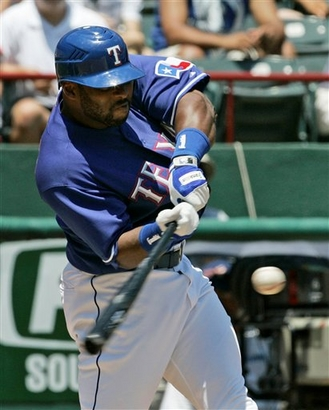
Bradley, Cubs Agree To $30 Million, 3 Year Deal (ap)

Milton Bradley signs with the Chicago Cubs. (Click here for full story.)

P.S Our Seattle Mariners could have used a bat like Bradley has. I do think Bradley is getting paid a little too much though.

Is Bradley worth $10 million a year? I don’t think so. But he is a professional hitter who had a good season last year with the Rangers.

Let’s look past his temper etc. The dude can hit! Gordon Curvey

Advertise with Music Inner City TV which airs 24 hours a day on Comcast On-Demand all over Western Washington state. On the air for 18 years! The only locally produced urban music/interview program in the Northwest (US). On the air for 18 years. And also advertise online at Music Inner City Online and here on Sports Inner City Online at our VERY VERY LOW rates! Video/Audio commercials, banners, links and more! Call us at 206-851-2423/206-414-6118 or e-mail us at gcurvey@yahoo.com.

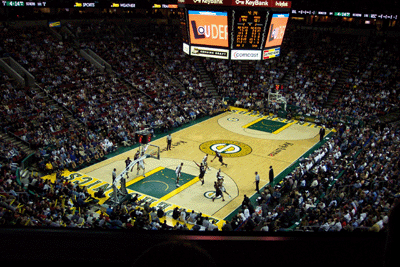
Clock Is Ticking For City’s NBA Hopes (Seattle Times)

Departed NBA Basketball Team And If It Will Return (click here for full story)

PS Charlotte and Sacramento and not Seattle for the NBA? This is wrong!! Something needs to happen as far as Key Arena getting remodeled because we will not get another Sonic team until this is done. This is a fact! The politicians will be in session soon. We have to put pressure on them to act!!!

I will not get to see Jamal Crawford, Rodney Stuckey, Spencer Hawes, Nate Robinson, Marcus Williams, and Brandon Roy come home to play a game. This is wrong!!

We have to follow Seattle U, the Huskies and other local teams. And no Sonics.

We need Lenny Wilkens, Gary Payton, Shawn Kemp, Downtown Fred Brown, Slick Watts and basketball legend Bill Russell (who lives in the Seattle area) to STAND UP and speak out about the Sonics returning here after the Key gets remodeled. That has to happen first.

In watching games on NBA-TV, I see a lot of empty seats at Bobcat and Kings games. Maybe they might want to move to Seattle. Again, after the Key is remodeled.

As the Rev Jesse Jackson Sr. says, “Keep Hope Alive” for the Key to get up to date and keep hope alive for the return of NBA basketball to Seattle. Gordon Curvey

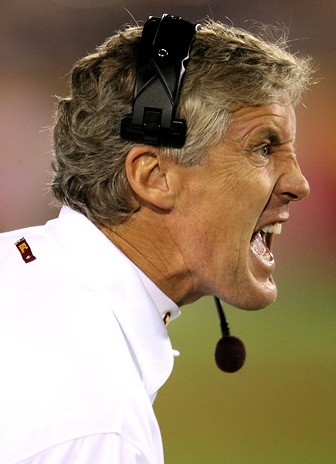
Carroll Is A Life Force At Street Level (L.A Times)

The USC football coach tries to make a difference in people’s lives with his midnight trips to the city’s toughest neighborhoods.

It could have been a USC football game, the narrow sidelines at the Coliseum.

Hey man, you’re doing great, keep it going,” said Pete Carroll, swooping in for a back slap as he approached Marlo Jones.

Jones could have been a quarterback.

Coach, thanks,” he said. “It’s been tough lately … we’re holding on.”

But this was no game, this was not the Coliseum, and Jones was not a quarterback.

This was a recent night on a sidewalk inside South L.A.’s squalid Jordan Downs housing project, hard by the Watts Towers.

And Marlo “Bow Wow” Jones is an ex-gangster, a guy who by his account has spent seven of his 29 years in jail, now working to turn his life around.

Pete Carroll in the ‘hood,” said a man standing near the Trojans coach, Bow Wow and me. “Man, this is crazy.”

Also, over the last couple of years, quite common.

Few know that about twice a month Carroll leaves his comfy digs at USC, hops in the back of a beaten Camry driven by a former gang member and heads to South L.A. neighborhoods where the snap of gunfire and the anguish of death occur with the steady regularity of a metronome.

These are not recruiting visits. He’s trying to save lives.

Most often, he arrives near midnight and walks shadowy streets with that familiar, electric strut, surrounded by little boys, grandparents, crack heads and gang toughs. He empathizes, listens, encourages, laughs. He talks about jobs and kids and marriage, about perspective and courage, about how difficult it must be to be caught in the madness of the streets.

He realizes that some might think he’s a fool, that some might say he should pay no mind to gang members. Naysayers do not stop him.

I don’t go to judge … just to show that someone cares,” he said. “Just go to give people here a little hope… . Get folks to step back and think. Hopefully, get them to change.”

Four years ago, moved by news of murders near USC’s campus, Carroll formed a foundation called A Better LA, dedicated to ending inner-city violence. He hoped to use the self-improvement thinking he’s long leaned on in coaching to help people in poor and dangerous neighborhoods.

He struggled to gain traction. He didn’t have much in the way of relationships with the gang members he hoped to influence. Then Carroll met Bo Taylor, a former gang member who long ago had dedicated his life to turning street toughs to the straight and narrow. Carroll and Taylor grew close. To be truly effective, Taylor told the coach, Carroll would need to learn more about the dreams and fears of people living in forgotten neighborhoods. The only way to do that would be to become a regular at the hot spots.

Carroll’s foundation now helps fund Taylor’s violence prevention nonprofit, Unity One, and several like it. They have a strategy: In the hot spots, identify the charismatic gang and neighborhood leaders, the ones everyone follows. Befriend them, gain their trust, help them change if needed, try to get them to take classes that teach everything from mediation to positive thinking. Even pay the ones who are most dedicated, turning them loose to help educate and prod.

Bow Wow is on the payroll. Among the Grape Street Crips, his word matters. On this night, well before we arrived, Taylor had called Bow Wow to make sure we would be welcomed. We were granted entry – on the streets, a ghetto pass – but we drove to Watts knowing there are no sure things. At any moment, guns could be pulled, shots fired. Over the last few weeks, we would come to find, four of Bow Wow’s friends had been killed near Jordan Downs.

We wound through the streets of South L.A., Taylor’s brother, Le’Chein, at the wheel, and pulled to a stop in a foggy parking lot. Taylor got out of the car first, instructing us to wait while he made sure the quartet of suspicious men at the corner knew who we were.

Carroll couldn’t help himself. He opened his door and popped out. The guys at the corner spotted him. Immediately, they relaxed. “Pete, Pete, hey Pete, my man!” they shouted.

We stood in a dark courtyard, littered with shards of broken glass. Carroll was quickly surrounded by a dozen people, some wanting to shake his hand, some staring in disbelief, some wanting to tell him a story. The coach heard talk of addiction, jail, police, prostitution and the Bible. He heard about the Bruins and Notre Dame and Neuheisel.

A blue van drove up. Nobody recognized it; most everyone eyeballed it, worried. One beat. Two beats. The van eased away, the air felt a little lighter. Through all of this, Carroll never flinched, never looked uncertain or fearful. Knowing he’d be leaving soon, he sidled up to Bow Wow, who has a calm, all-knowing countenance.

The neighborhood, Bow Wow said, was tense. There’d been a killing, everyone knew the victim and now there were rumors of possible retaliation.

It’s like a black cloud hanging over us,” Bow Wow muttered. “But we’re glad you’re out here, Pete. It means a lot to the people here.”

Carroll assured that he wanted to be at Jordan Downs, especially now. He invited everyone to a Trojans scrimmage as his guest. He wanted them to get away from the projects, if only to feel a bit less stress for an afternoon.

This was a weeknight in the middle of spring football practice, so Carroll couldn’t stay as long as he often does. He began climbing into the back seat of the Camry, looking as if he wished he could stay longer.

Hey Pete, Pete,” came a chorus of voices. “Come back real soon!”

Just keep getting after it,” he replied. “I’ll be back.”

——

Last month in this space I wrote about Jamiel Shaw, an L.A. High football star whose bright future was snuffed out in a drive-by shooting. I pledged to do a bit more reporting about the intersection of sport and the inner city and asked readers to get involved in our troubled neighborhoods – by tutoring, supporting charities, maybe pressing politicians for change. Most of all, I argued, we need to care more, even about people in gangs. They can change. We can help them.

After he read what I’d written, Pete Carroll invited me to come with him to the ‘hood. Now, I’m not recommending that you do as he does, putting yourself in harm’s way for the cause. But next time you consider whether you should get involved, or whether your efforts would be worth it, think of this column and Carroll down at Jordan Downs. (You can also find out more about his foundation by visiting abetterla.com.)

If the USC coach – wealthy, famous, dealing with off-the-charts job pressure – can find a way to help calm the violence that plagues this city, any of us can.

Kurt Streeter can be reached at kurt.streeter@latimes.com. To read previous columns by Streeter, go to latimes.com/streeter

KPMG Presents $1 Million To MLB For Inner Cities (RBI) Program (CSR Wire)

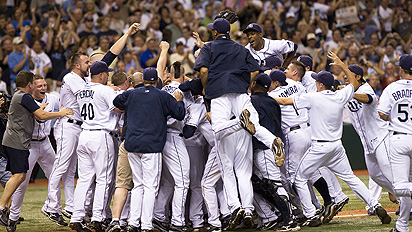
KPMG LLP, the U.S. audit, tax and advisory firm, presented a $1 million check to Major League Baseball (MLB) Charities for the Reviving Baseball in Inner Cities (RBI) program at Game 2 of the 2008 MLB World Series between the Philadelphia Phillies and the Tampa Bay Rays at Tropicana Field in St. Petersburg, FL.

“RBI presented by KPMG” is a MLB youth outreach program designed to increase participation among boys and girls in baseball and softball, encourage academic achievement and teach the value of team work.

KPMG Chairman Timothy P. Flynn presented the $1 million check to MLB Executive Vice President, Business, Tim Brosnan, and was joined on the field by the members from each of the 2008 RBI World Series Championship teams – the Santo Domingo Girls’ Softball team, the Detroit Junior Boys’ team and the Los Angeles Senior Boys’ team, as well as by RBI alum and Rays’ left fielder Carl Crawford.

“The positive impact on the lives of so many kids who participated in the RBI program last year has generated real excitement as the KPMG relationship with MLB and the RBI program has moved into its second year,” said Timothy P. Flynn, KPMG Chairman. “KPMG is proud to help further RBI’s mission of opening the doors of opportunity for boys and girls through sport, mentoring and education, which remains consistent with the firm’s core commitment to serving the communities in which KPMG people live and work.”

The $1 million is part of a multi-year sponsorship agreement announced in June 2007 between KPMG and Major League Baseball Properties (MLBP) to enhance and expand RBI. Flynn also presented a $1 million check for RBI at last year’s MLB World Series.

Additionally, KPMG has donated thousands of employee and intern volunteer hours to support the program both on and off the field, helping inner city boys and girls learn how to play baseball and softball while also serving as mentors, tutors and life skills coaches.

“Major League Baseball thanks KPMG for its continued support of RBI,” said Baseball Commissioner Allan H. (Bud) Selig. “Together with KPMG we are helping boys and girls play the game and improve their lives. Since RBI’s inception, 170 RBI participants have been drafted by MLB teams. Countless more children have been impacted by the program, going on to college and finding positive ways to contribute to their communities.”

Founded in 1989, Major League Baseball’s RBI program has a presence in more than 200 cities worldwide, and annually provides more than 100,000 boys and girls with the opportunity to play baseball and softball. RBI alumni currently playing in the Major Leagues include Carl Crawford (Tampa Rays), Jimmy Rollins (Philadelphia Phillies), Covelli “Coco” Crisp (Boston Red Sox), and Dontrelle Willis (Detroit Tigers).


About KPMG LLP

KPMG LLP, the audit, tax and advisory firm (www.us.kpmg.com), is the U.S. member firm of KPMG International. KPMG International’s member firms have 123,000 professionals, including more than 7,100 partners, in 145 countries.

About Major League Baseball Charities

Major League Baseball Charities is a not-for-profit corporation that provides support to local, national and international tax- exempt organizations to directly conduct or sponsor activities for the promotion of good health, physical education, public safety, medical research, literacy and educational or charitable purposes. In addition to supporting Boys & Girls Clubs of America (BGCA), the Official Charity of Major League Baseball, MLB Charities provides support to a number of other national charitable initiatives, including Little League Baseball, the National Urban League and the Jackie Robinson Foundation. The Office of the Commissioner of Baseball pays all administrative expenses for MLB Charities.

For more information please contact:

Steven Llanes
KPMG LLP
201-307-7105

Dan Ginsburg
KPMG LLP
201-307-8270

Johnson Has The Magic Touch In Business Too (USA Today)

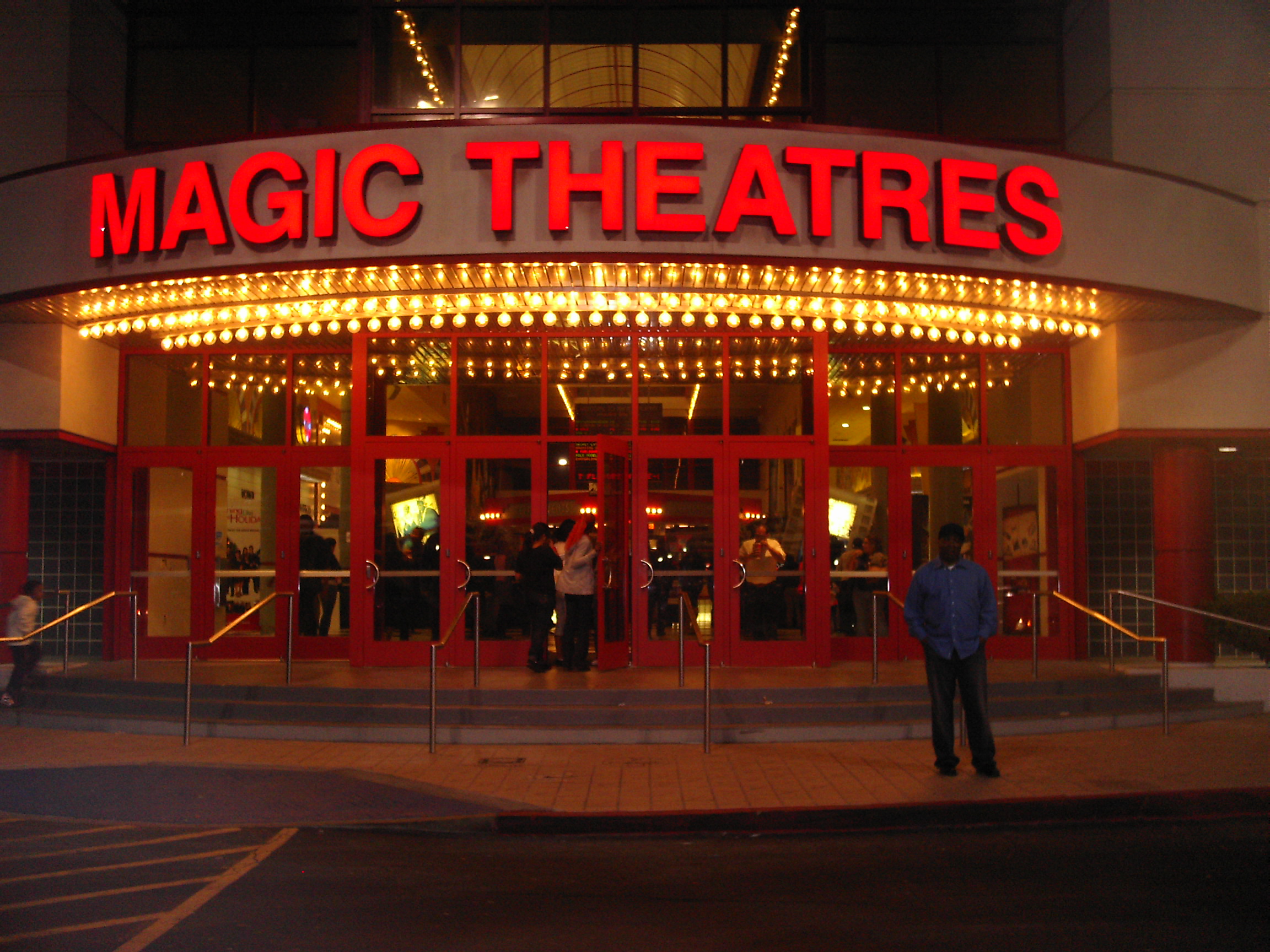
BEVERLY HILLS — Almost nobody would question Earvin Johnson’s skill on the basketball court. But in his second career as an entrepreneur, there were doubters from the start. (pic-Sports Inner City/Music Inner City’s Gordon Curvey in front of Magic Theatres in Los Angeles recently)

Johnson, best known by his nickname “Magic,” remains one of the best players to ever don the gold and purple Los Angeles Lakers uniform. Johnson was the star point guard and a key to the Lakers’ domination in the 1980s, helping to hand the team five NBA championships. An oversize copy of his No. 32 jersey hangs above the Lakers’ home court.

But despite his towering 6-foot-9-inch stature and vise-grip handshake, at first glance, Johnson didn’t seem like such a natural in the boardroom.

Executives he pitched on a business idea developed when still a player — opening high-quality movie theaters and restaurants in inner-city neighborhoods — often didn’t see what he saw. Instead, “they saw me as just a basketball player,” he says from inside his modestly decorated offices in Beverly Hills.

In his recently released book, 32 Ways to be a Champion in Business, Johnson wrote that executives would “hand me a basketball and ask for an autograph, but they did not want to hear my pitch for investing in neighborhoods populated by blacks.”

Johnson, 49, isn’t your typical buttoned-up executive. He sits comfortably reclined in his chair, speaks casually, and freely flashes his trademark smile. Retired from basketball following his stunning 1991 announcement that he had contracted HIV, Johnson has focused on succeeding in a business world where many former athletes have failed.

But Johnson says he had a dream and a concrete plan. While traversing the urban hearts of cities in team buses to basketball games, he saw boarded-up businesses and a lack of retail outlets. He told himself he’d help revive some of those neighborhoods when he could, he says.

And that’s the magic of Magic. While other executives steered clear of urban areas, Johnson saw opportunity. His business plan, his overtime performance after basketball, was to bring established retail brands to the inner cities by tailoring them to the residents.

From experience comes business

It’s that niche that has morphed Magic Johnson from a name on the back of a basketball jersey into a brand in its own right. Magic Johnson Enterprises is a private company that owns or helps operate companies ranging from more than a dozen 24 Hour Fitness centers, more than 100 Starbucks locations, food service companies, a T.G.I. Friday’s in Los Angeles and other businesses across the country. The company also has a private investment arm, with $1 billion in cash, which Johnson says will help the company expand, especially now that real estate can be bought at low prices.

It’s just as Johnson saw it. The inner-city market was a big opportunity for someone with the knowledge to go after it, he says. “I knew that because I lived it. I just turned it into a business.”

It’s hard to summarize the swath of Johnson’s businesses, as they range from food service to job placement and coffee. But the common theme of most is the marriage of his name alongside another well-known brand. Together, Johnson and another company enter urban markets that some have long avoided.

The Magic touch is taking chains with a familiar formula that plays well in the suburbs, and tailoring them so they fit the customers and tastes of the inner city. Rather than having to drive to the suburbs, residents can stay put and frequent Johnson’s local twist on a national chain. Completing the circle, Magic Johnson Foundation, Johnson’s philanthropic arm, invests in the community by building computer centers and other social services, helping to build goodwill with the residents.

Johnson is scarce on the details on precisely what the things are that he does to make his version of chains different that those in the suburbs, or in his words, “Magicize” it.

But he uses an example to describe how the first Starbucks he opened in Los Angeles is different than others in the sprawling chain. Johnson noticed many regular customers at the Starbucks gathered to play chess. It was a scene reminiscent of the casual chess tournaments that take place in inner-city parks.

So Johnson bent the corporate rules to make the chess players more welcome. After getting approval from Starbucks, he installed several picnic tables outside that not only captured the vibe of the chess tournaments but also let the local residents know they were welcome. Now, the Starbucks draws a loyal following of chess players, who lure friends and other chess players, he says.

Burger King restaurants that Johnson owns are also a little different. Customers hear Magic Johnson’s voice on the loudspeaker in the drive-through, instead of a canned anonymous voice.

In plain sight

The fact the inner cities could support mainstream brands may seem evident now, but it was practically revolutionary when Johnson started. Getting investors in the early days of the business was challenging, especially following the riots that tore up Los Angeles following the 1992 Rodney King trial, he says.

Despite the success of his movie theater in Los Angeles, Johnson knew he needed more money to expand to other businesses.

His advisers in 1995 suggested approaching California’s massive public pension fund, the California Public Employees’ Retirement System (Calpers), for $150 million to develop his first non-theater business, what would be his first Starbucks and T.G.I .Friday’s near Los Angeles’ South Central neighborhood. He didn’t quite get the answer he wanted, though.

Officials at Calpers wanted to know why, if his idea was such a good one, no one else was doing it. That stumped Johnson. “I couldn’t answer the question,” he says. He’d wondered himself why even the largest U.S. companies were avoiding big potential profits to be made serving urban markets filled with consumers ready to spend but with nowhere to go.

Proof of vision

Eventually, Calpers got on board with $50 million to start. That money helped Johnson finance his dream and show that the concept could work. Another $100 million from Calpers followed shortly after. Johnson’s business “has proven to be a successful model,” says Calpers spokeswoman Pat Macht.

Johnson is also quick to see opportunities. After several companies called asking for help on ways to tap the inner-city market, he created a consulting and licensing business.

Best Buy, for instance, in February 2008 turned to Johnson for help on operating stores that appeal more to the urban market. “We believe our relationship with Magic Johnson Enterprises will help us learn and apply fresh perspectives, which can strengthen our business and the communities where we have stores — it makes good business sense,” the consumer electronics retailer’s spokeswoman Dawn Bryant said in an e-mailed response.

Despite the challenging economy, Johnson says some of the best opportunities are ahead. Magic Johnson Enterprises’ capital management business, for instance, raised, but didn’t deploy, $1 billion last year. “Cash is king,” he says, adding that he’s constantly approached by real estate investors looking to sell choice properties. Downtown areas are especially ripe for investment, he says.

That’s not to say it’s nothing but net for Johnson, the businessman. Foot traffic is falling at his Starbucks stores as many consumers, not just in urban markets, cut back, he says. Consumers are seeing Starbucks “as a luxury. (Consumers) may only go once a week or not at all,” he says. Starbucks warned on Dec. 4 that sales at stores open a year or more have fallen 9% in the U.S. so far in the quarter started in late September.

Johnson, though, has faced difficulty before, and that hasn’t stopped him. Starbucks just needs to reconnect with what it does best, he says, and stop “trying to be everything to everybody.”

That’s really his key advice to entrepreneurs, and something he follows himself. Pick a niche, something you can be good at, and don’t stray. “You need to play to your strengths,” he says. “My strength is urban America.”