Miami Coach Upset Over Lack Of Blacks In Ranks (ap)

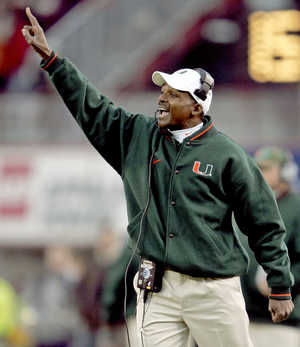
Coral Gables, Fla- Of the 65 coaches leading programs affilliated with the Bowl Championship Series, Miami’s Raindy Shannon is about to stand alone.

Soon he will be the only African American in the group.

After Sylvester Croom resigned recently from Mississippi State, along with the recent firing of Kanasa State’s Ron Prince and Washington’s Ty Willingham-Shannon is one of three black coaches left in major college football, and the only one at a BCS school.

The last time there were only three African American head coaches at Div 1-A level was 1993, and Shannon, who waited many years before getting his first legitimate chance at becoming a head coach, simply can’t understand the lack of progress in bridging the sideline race gap.

“It’s sad that we keep talking about the same things,” Shannon told AP recently. “Maybe Sylvester was tired. I know a year or two ago he had surgery on his hip or back. But after awhile, you say to yourself, how much longer can we keep going just talking about this? We can’t keep talking about the same issues every year.”

And yet, at this time every year, the issue keeps coming back.

Bowl season hasn’t even started, but already, some marquee jobs have come open and already filled. For instance Tennessee hired Lane Kiffin as head coach and Clemson could move to promote Dabo Sweeney to head coach soon.

One of the few black candidates believed to have legitimate interest from a BCS school that’s changing coaches is Illinois offensive coordinator Mike Locksley, who has been mentioned as a replacement for Greg Robinson at Syracuse. Buffalo’s Turner Gill who along with Shannon and Houston’s Kevin Sumlin, is one of three black coaches who have jobs of 2009 is also thought to be a Syracuse.

The only other prominant black assistant to be mentioned so far is Notre Dame offensive coordinator Mike Haywood, who reportedly was interviewed by Washington to replace Willingham.

Floyd Kieth, executive director of the Black Coaches and Administrators, has said many times he’d like to see the number of black college football coaches get to at least 10 but now the total is headed the other way, even though nearly half of the players at the level formerly known as Division 1-A are African American.

Gill told The Buffalo News for a recent story that he always heard the same thing when he interviewed for various jobs before moving to Western New York.

“Not the right fit,” Gill told the newspaper. “The words not the right fit can be looked at in several ways. Not to say that you were not qualified but maybe they want a guy who’s going to be there fo four or five years or has a different offensive or defensive philosophy. There’s so many different dynamics to the word “fit.”

According to a recent BCA hiring report card, only 12 of 199 vacancies between 1996 and 2006 went to African Americans.

But the need to label and track the number of minority coaches is still puzzling to Shannon.

“I think we all should be treated as coaches equally. But it’s just how society is. The minority deal is always going to be there.”

Chad Johnson Says McNabb Helped Him Put His Team First (espn.com)

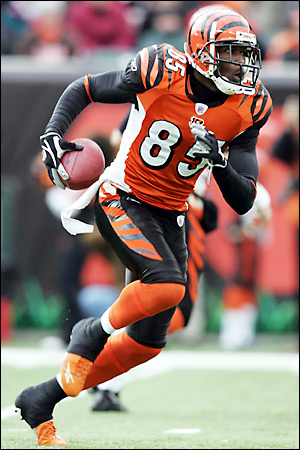
Chad Johnson aka Ocho Cinco is crediting Philadelphia Eagles QB Donovan McNabb with helping him adjust his attitude at the start of training camp.

Johnson, who had spent the offseason criticizing the Bengals and broadly hinting to the media that he would appreciate a trade out of Cincinnati, said McNabb helped convince him to put his teammates first and forget about his personal disappointments.

Chad calling McNabb a close friend, said McNabb reminded him that while he might feel miserable, millions of people would gladly trade places with him.

“I blew his phone up,” Johnson said recently. “Donovan was a big influence. He really is one of the reasons why I really turned myself around and looked at my situation as more of a positive outlook and just thinking about all the people that would love to play this game.”

“He took me in that direction, instead of thinking about, Oh I’m tired of losing and I don’t want to be here anymore, but just thinking about, man a lot of people wish they were in your shoes just to have the ability to play in the NFL. That kind of turned me around, and that’s why I’ve been as positive as I have been this year, and even though we’re losing I’ve just been plugging away.”

McNabb was not alone in helping Johnson get focused on football. Earlier this season, Ray Lewis said he also counseled Johnson spiritually.

At that time before Ocho Cinco (we at SIC are still calling him Chad Johnson), Lewis said his friendship outweighed the fact he was a key player on a division rival.

Lewis said, “You don’t care about wins and losses when it comes down to brotherhood and competition. That’s why I love when we play against Chad and play against those guys like that, because you’re going to get their best, and that’s why you play the game.”

Sports Inner City Radio Podcast/2-4-2010

From the studios of “Music Inner City TV” in Seattle this is the NEW “Sports Inner City Radio” Podcasts featuring interviews or public service announcements with people in the sports world. Topics on this show include Tom Watson’s comments about Tiger, the Super Bowl, possible problems in the Celtics locker room and more.

Plus “classic soul” music and hip-hop plus new songs.

PREVIOUS “SPORTS INNER CITY RADIO” AND “MUSIC INNER CITY RADIO” PODCASTS click here.

Chief Rebukes Thomas For Involving Daughter (AP)

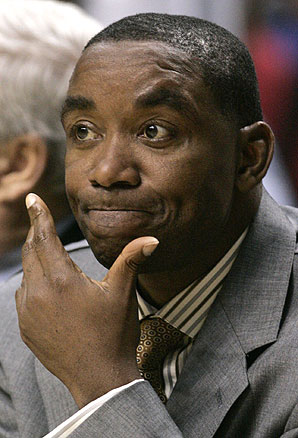
New York- A suburban police chief likened the conflicting accounts of an accidental overdose at Isiah Thomas’ home to a “cover up” and rebuked the former New York coach for saying it was his teenage daughter who required treatment.

“It wasn’t his daughter,” Harrison Police Chief David Hall told the AP. “And why they’re throwing her under the bus is beyond my ability to understand.”

Authorities were called to Thomas’ Westchester County home on Oct 24th, where police said a 47 year old man was taken to the hospital and treated for an overdose of sleeping pills. Several media outlets reported that police confirmed it was Thomas who went to the hospital.

But reached on his cell phone, the former NBA great player told the New York Post he had not been treated for a sleeping pill overdose, and that it was his 17 year old daughter Lauren who had a medical issue.

It “wasn’t an overdose,” he told the newspaper. My daughter is very down right now. None of us are O.K.”

Hall forcefully refuted Thomas’ statement.

“My cops know the difference between a 47 year old black male and a young black female,” Hall said.

Voice mails and text messages from AP were left on Thomas’ cell phone. Messeges left earlier with Thomas’ publicist and two of his attorneys were not returned.

No sicide note was found, and police were classifying the case as an “accidental drug overdose” on “a number” of prescription sleeping pills, Hall said.

The developments, days before the start of another NBA season, are the latest drama in what has been a difficult year for Thomas.

He was fired as the Knicks’ coach April 18th after a season of dreadful basketball, a sexual harassment lawsuit and unending chants from fans demanding his dismissal.

As a player, Thomas won NBA titles with the Detroit Pistons in 1989 and 1990 and won an NCAA championship with Indiana in 1981. He joined the Knicks as the team president in 2003 and became coach in June 2006 after Larry Brown was fired.

Overall, he is 187-223 as an NBA coach, leading the Indiana Pacers to the playoffs in three straight years from 2000-03.

P.S Seattle natives Jamal Crawford and Nate Robinson play for the New York Knicks.

For African Americans, A World Series That Looks Like Them (L.A. Times)

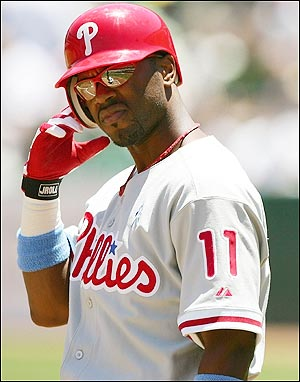
By Bill Shalkin-Jimmy Rollins played his high school games at Willie Stargell Field. The sign said so.

“I thought he was some guy that must have given a lot of money,” Rollins said.

Stargell was one of the greatest players in baseball history, but Rollins grew up among a generation of African American youth that paid little attention to baseball.

For all the millions baseball has poured into reviving its sport in the inner cities of America, into trying to reclaim a place alongside football and basketball in popularity among young African Americans, the World Series has sent an entirely different message.

In the 2005 Series, the Houston Astros had no African American players. The Colorado Rockies last year had one, an obscure relief pitcher.

But this year, the competing teams both feature African American stars, to the delight of the players invloved and to the officials charged with luring African American youth back to the baseball diamond.

“It’s got to be huge, just to see these faces on TV,” Tampa Bay pitcher David Price said, “so young African Americans can relate and see something to shoot for.”

African Americans accounted for 8.2% of major league players last season, according to a diversity study by the University Of Central Florida, the lowest annual percentage since the study began in 1990. (The Seattle Mariners has zero African Americans on the team this past season)

This series features such stars as Rollins, the MVP of the NL last season, the Phillies Ryan Howard, the 2008 MVP and this year’s major league home run leader, and the Rays B.J. Upton, who needs one home run to tie the postseason record.

The Rays have five African Americans on their World Series roster-Upton, Price, Carl Crawford, Cliff Floyd and Edwin Jackson-believed to be the largest number since the 2002 Giants.

This is a new generation of players-Rollins is 29, Howard is 28, Upton is 24, Price is 23-to inspire a new generation of African American athletes to take up the sport.

“You can’t buy better exposure than that,” said Darrell Miller, director of baseball’s first urban youth academy, located at Compton College.

“We can say all we want about the great opportunity, but it speaks volumes when they can see young, vibrant superstars showing their successes and skills on prime time TV, on the biggest stage baseball has to offer.”

Ron Miller said he’ll be watching on TV, and he’ll try to get his friends to watch too.

Miller is a freshman at Crenshaw High, a Los Angeles athletic powerhouse with a history of baseball excellence, including star outfield Darryl Strawberry. Miller’s friends prefer football and basketball, but he prefers baseball