For African Americans, A World Series That Looks Like Them (L.A. Times)
By admin on Oct 24, 2008 in Uncategorized
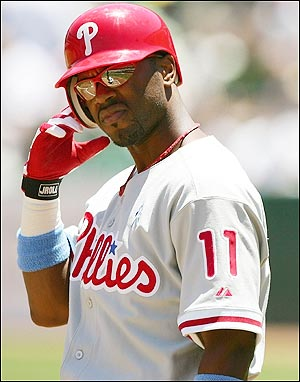 By Bill Shalkin-Jimmy Rollins played his high school games at Willie Stargell Field. The sign said so.
“I thought he was some guy that must have given a lot of money,” Rollins said.
Stargell was one of the greatest players in baseball history, but Rollins grew up among a generation of African American youth that paid little attention to baseball.
For all the millions baseball has poured into reviving its sport in the inner cities of America, into trying to reclaim a place alongside football and basketball in popularity among young African Americans, the World Series has sent an entirely different message.
In the 2005 Series, the Houston Astros had no African American players. The Colorado Rockies last year had one, an obscure relief pitcher.
But this year, the competing teams both feature African American stars, to the delight of the players invloved and to the officials charged with luring African American youth back to the baseball diamond.
“It’s got to be huge, just to see these faces on TV,” Tampa Bay pitcher David Price said, “so young African Americans can relate and see something to shoot for.”
African Americans accounted for 8.2% of major league players last season, according to a diversity study by the University Of Central Florida, the lowest annual percentage since the study began in 1990. (The Seattle Mariners has zero African Americans on the team this past season)
This series features such stars as Rollins, the MVP of the NL last season, the Phillies Ryan Howard, the 2008 MVP and this year’s major league home run leader, and the Rays B.J. Upton, who needs one home run to tie the postseason record.
The Rays have five African Americans on their World Series roster-Upton, Price, Carl Crawford, Cliff Floyd and Edwin Jackson-believed to be the largest number since the 2002 Giants.
This is a new generation of players-Rollins is 29, Howard is 28, Upton is 24, Price is 23-to inspire a new generation of African American athletes to take up the sport.
“You can’t buy better exposure than that,” said Darrell Miller, director of baseball’s first urban youth academy, located at Compton College.
“We can say all we want about the great opportunity, but it speaks volumes when they can see young, vibrant superstars showing their successes and skills on prime time TV, on the biggest stage baseball has to offer.”
Ron Miller said he’ll be watching on TV, and he’ll try to get his friends to watch too.
Miller is a freshman at Crenshaw High, a Los Angeles athletic powerhouse with a history of baseball excellence, including star outfield Darryl Strawberry. Miller’s friends prefer football and basketball, but he prefers baseball